
Not too long ago, Jim got a new Android phone and found an alarm ring tone he really likes. It sings, “Goood Morn….ing” and then plays this jazzy little tune. That’s exactly what we heard at 5:30 a.m. this morning so we could be in downtown Key West by 6:45 a.m. to catch our ferry to the Dry Tortugas.
Located 70 miles from Key West, there is no way to get there except sea plane or ferry and a little on the pricey side but oh so worth it. Acquired as part of the purchase of Florida from Spain in 1821, the Tortugas, as they were named by Ponce de Leon in 1513, were a major shipping route and very attractive to the U.S. government. They consist of seven little islands (almost nothing more than sand bars) the largest of which is Garden Key. When the map makers starting plotting these on maps the name got changed from Los Tortugas (the turtles) to Dry Tortugas to warn everyone there was no fresh water on these islands.
In 1846, the US Government began building Fort Jefferson, the third largest fortification ever built, on Garden Key to protect this important shipping route.  It encompasses the entire 16 acres of the Key and took 43 years to build but was never really completed. Like many other government projects, Fort Jefferson was ill fated from the start. Evidently, the government never considered the location when trying to incorporate methods used at other forts, albeit not of this size. For instance, it contains almost 16 million bricks. What do you think happens when you put 16 million bricks on a sand bar? Yup, too heavy and foundation cracks. They put in a mote around the entire fort that would not only protect them from invasions from land, but double as their sewage system when the tide would come in and go out. Unfortunately, Florida tides are not as significant as they are up North and the waste was never washed out into the sea. Yuck! Then there’s the water filtration system. They were collecting the rain water from the top of the walls and filtering it through layers of sand into holding tanks in the cellars. A few issues they never thought of were the water they used to mix the mortar in the holding tanks was made from the sea water filled with salt and the sand they filtered the water through was sand from the ocean; more salt. Anyway, it didn’t work in this fort. It brought that often heard saying, “That’s not how we did it up North” to my mind immediately.
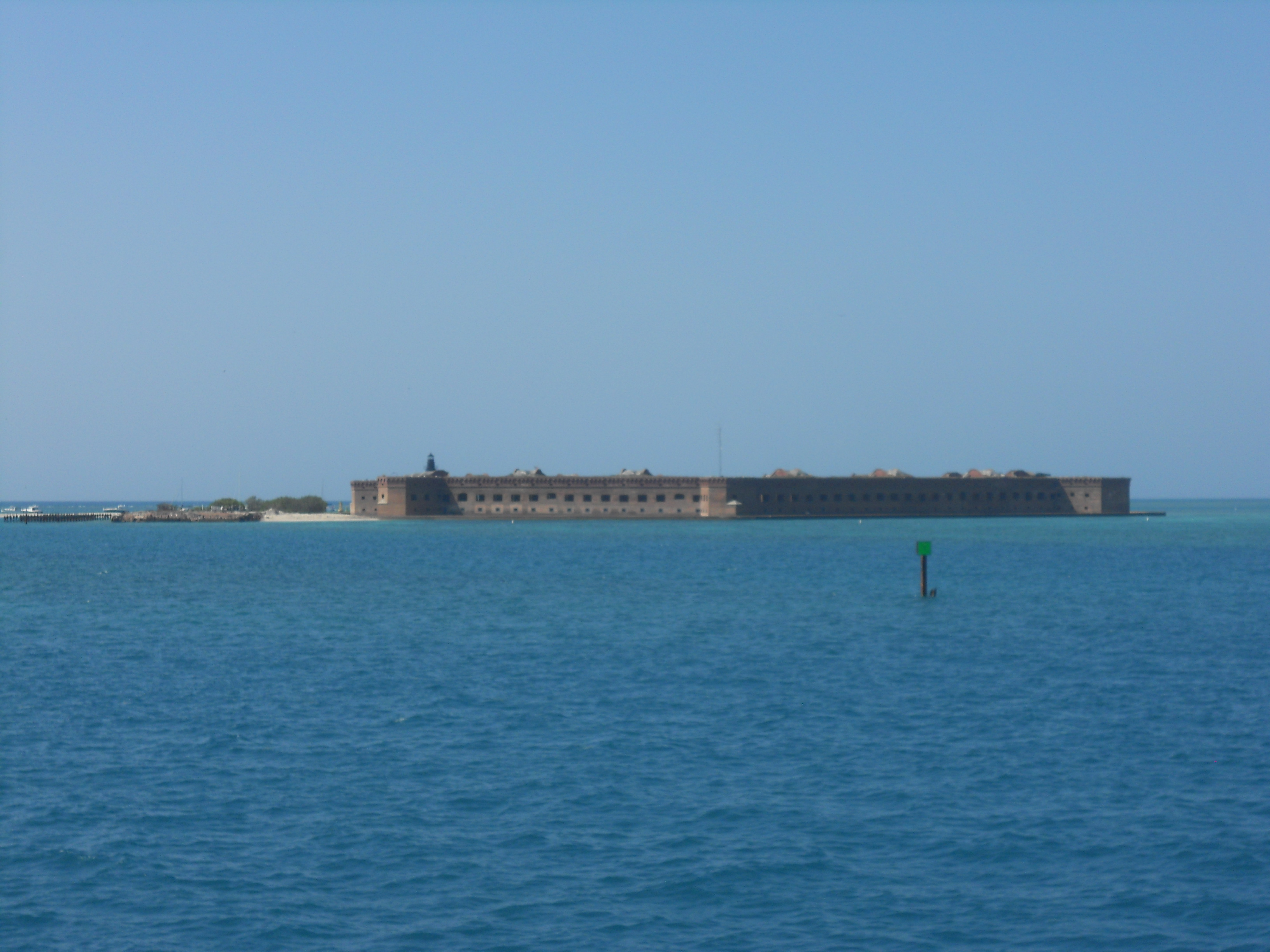 Fort Jefferson as we approach on boat, as you can see it takes up the entire island.
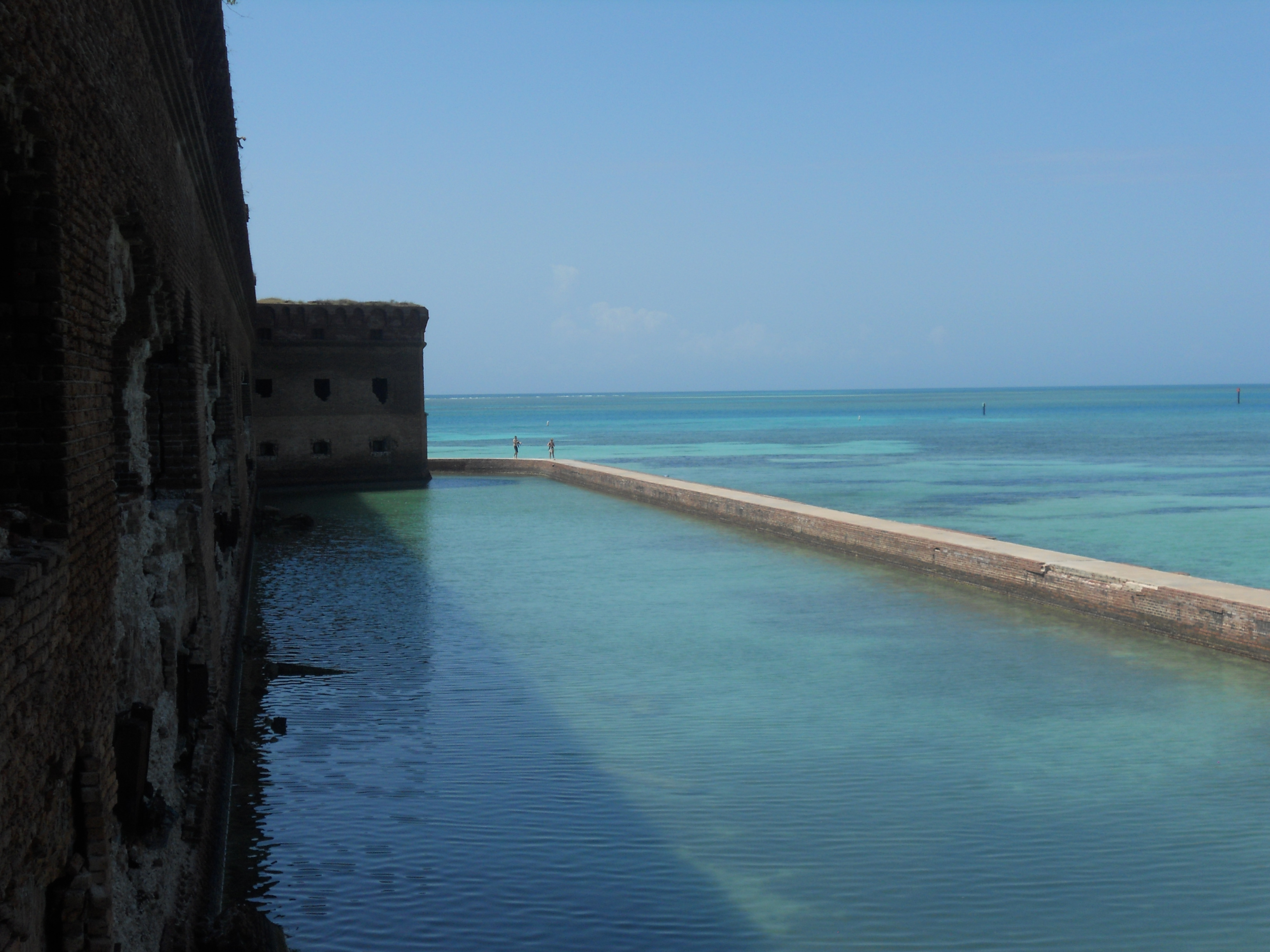 This is the moat around the fort.
 Interior of Fort
During the Civil War, the fort was a Union stronghold and used as a prison. This is where the infamous Dr. Mud who gave aid to John Wilkes Booth was imprisoned with several other assassination conspirators. Between the water issues, bad food, sewage stench, and extreme heat, Fort Jefferson was the worse place you could be sent.
But today, the reefs are considered the third best in the world mostly because of their limited access. They have been allowed to grow and become home to all kinds of life without the constant interference from people. The adjoining Bush Key, is home to 100,000 sooty terns each year in mating season and the magnificient frigate birds, with their 7 foot wing spans, soar over the fort like a miniature air force. The female Frigate has a white underbelly, just like the few of us who still wear one piece bathing suits. Over 300 species of birds stop here on their way to or from somewhere. This is where John James Audubon spent time painting and and observing many of the different birds of the world.
The mote around the fort is .6 of a mile and easily walked even in the hot sun. If you don’t want to go through the trouble of snorkeling to see the reefs, you can just walk the mote and see them through the clear water.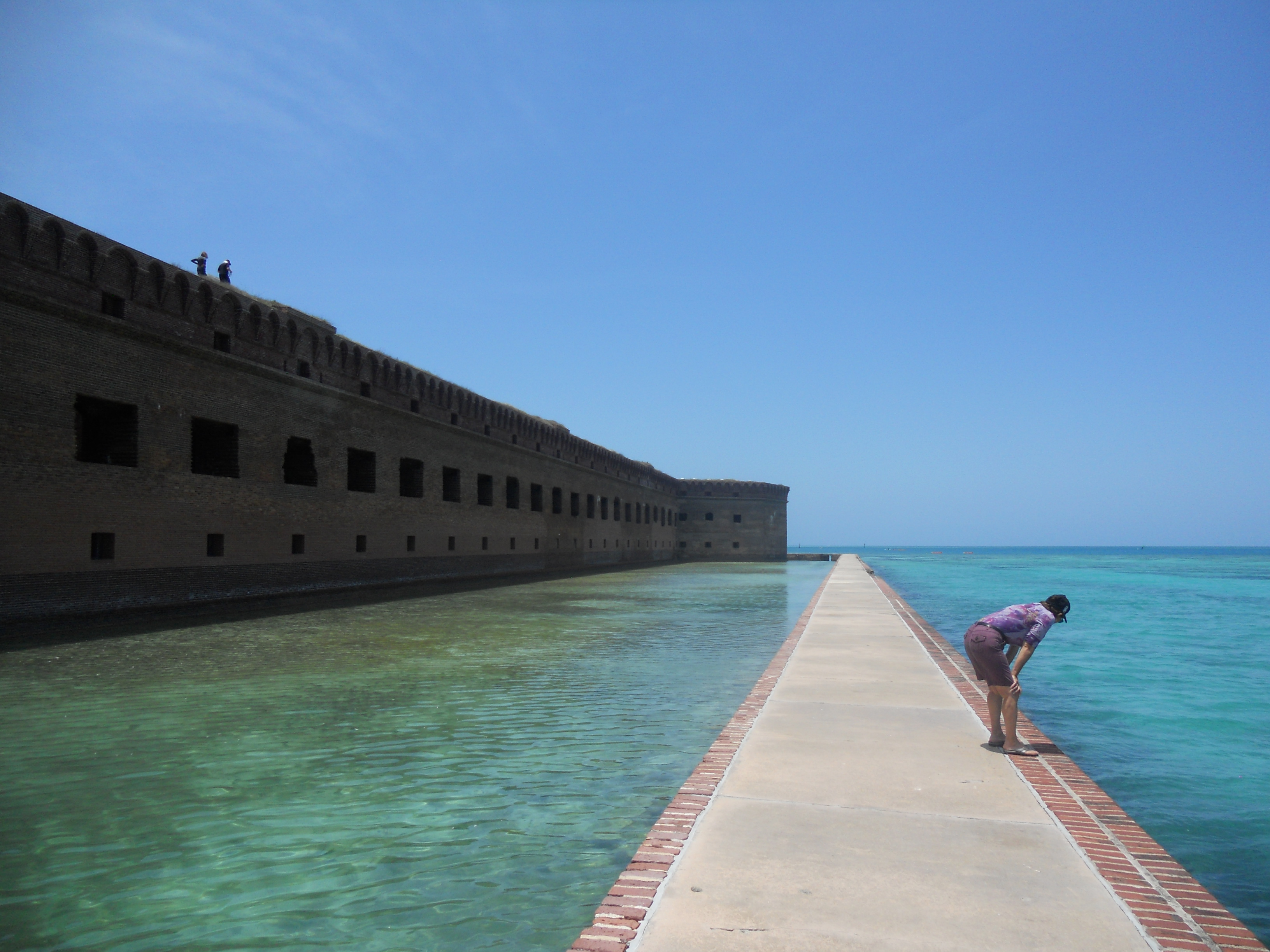 MaryGrace watching many fish that were easy to see along the edge of the wall as you can see the water was very clear.
We chose the mote route. One of the advantages of being older and wiser is understanding how uncomfortable the return 2 1/2 hour trip would be after being in salt water with no chance for a shower.
What a great day!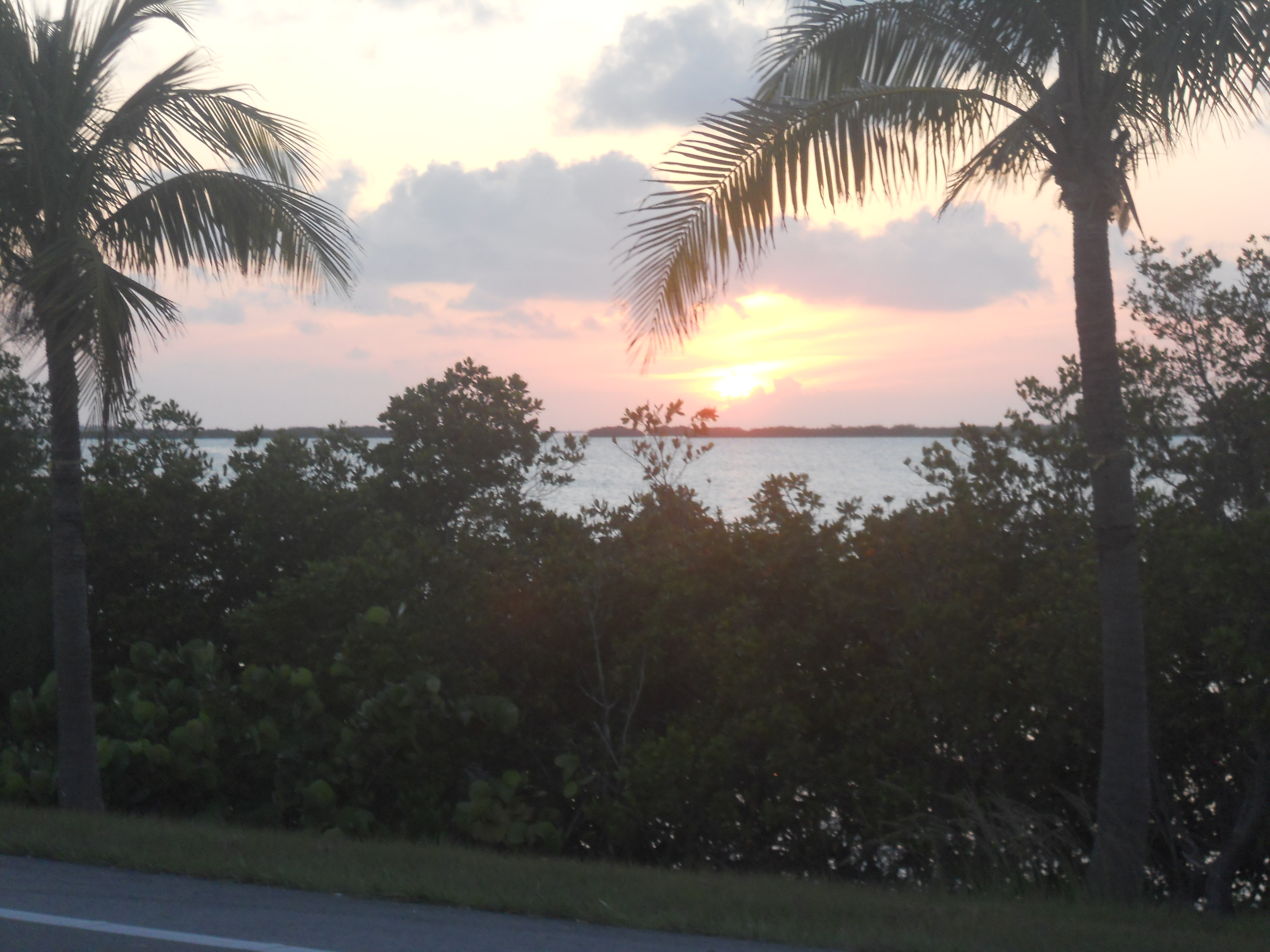 Sunset near our campsite after returning from Ft. Jefferson
 goneagainblog.com
Wow, you two are such the nomads!!!!!!!! Looks awesome. Enjoy yourselves. Xo